Press Release
Taking Action Against Methamphetamine
Next Steps And New Tools In The Administration's Efforts
The problems associated with the synthetic drug methamphetamine demand aggressive and collaborative solutions.
To combat methamphetamine production, trafficking and abuse, the Bush Administration has a comprehensive strategy involving the Department of Justice, the Department of Health and Human Services, and the Office of National Drug Control Policy working in conjunction with state and local officials. The Administration's efforts are focused on four core areas: prevention and treatment; law enforcement; education; and management of the drug's unique consequences.
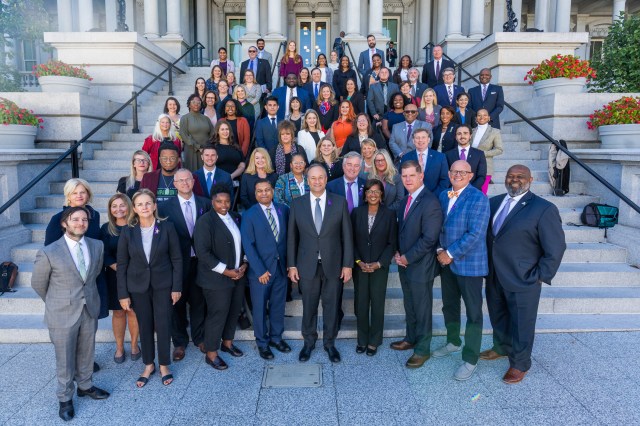
Today in Nashville, TN, Attorney General Alberto Gonzales, HHS Secretary Mike Leavitt, and ONDCP Director John Walters visited the Davidson County Drug Court and Treatment Center and announced new tools in their ongoing efforts to target methamphetamine.
The Administration Strongly Supports The Development Of Federal Legislation.
The Administration strongly supports the development of Federal legislation to combat methamphetamine production, trafficking and abuse, including restrictions on the precursor chemicals required to make methamphetamine. Any restrictions placed on retail access to over the counter cold medicines must balance the needs of law enforcement with the need for legitimate consumer access to widely used and effective medications.
The Administration believes the following steps, among others, would help address the problems associated with methamphetamine in a balanced way:
-
Impose an individual purchase limit of 3.6 grams per transaction for retail sales of over the counter pseudoephedrine products.
-
Eliminate the blister pack exemption for pseudoephedrine products, thus requiring all products containing psuedoephedrine to be subject to Federal law regardless of how they are packaged.
-
Require importers of pseudoephedrine to get Drug Enforcement Administration (DEA) approval if there is a change to the shipment's original purchaser in order to prevent the diversion of the product for illegal use.
The Administration Is Adding New Tools To An Aggressive And Collaborative Approach.
The President's FY 2006 drug control budget is $12.4 billion, with increases in areas vital to the fight against methamphetamineincluding treatment programs, domestic law enforcement, and international efforts. New tools announced today will strengthen the Administration's efforts to prevent the production, trafficking, and abuse of this dangerous drug.
Prevention And Treatment
-
Targeted Capacity Expansion Grants (TCE)Today HHS is announcing $16.2 million over three years for 11 new Substance Abuse and Mental Health Services Administration (SAMHSA) TCE grants focusing on treatment for methamphetamine addiction. One of these is a grant of $1.5 million over three years to the Tennessee Department of Health to target abuse of methamphetamine and other emerging drugs in six rural counties. TCE grants help States and local officials identify and address new and emerging trends in substance abuse treatment needs. This funding comes on top of the $1.8 billion to states for substance abuse prevention and treatment programs; a proposed $50 million increase to the $100 million Access to Recovery program; and a $93.5 million request for expansion of the Strategic Prevention Framework to advance community-based substance abuse prevention programs.
-
Assistance On Methamphetamine-Related Child AbuseThe Administration for Children and Families (ACF) has established a National Resource Center on Child Protective Services to provide technical assistance to state and local Child Protective Services agencies to improve their prevention, assessment and treatment of child abuse and neglect. This year, the Center will provide information and training to child welfare workers on how to protect children whose parents use methamphetamine.
-
Research Into Medications and Behavioral TherapiesFunding of methamphetamine-related research has increased almost 150 percent from approximately $15 million in FY 2000 to more than $37 million in FY 2004. The National Institute of Drug Abuse (NIDA) is tracking use of methamphetamine; supporting research into medications that may reduce or eliminate cognitive impairment and treat overdoses; and research into the most effective behavioral therapies for methamphetamine addiction.
-
Drug-Free CommunitiesThis HHS administered program supports approximately 775 community anti-drug coalitions across the country. Each provides a focus point for community-based substance abuse prevention efforts.
Law Enforcement
-
Prioritize Federal ProsecutionsAt the direction of the Attorney General, United States Attorney's Offices will grant a high priority to the prosecution of methamphetamine cooks and repeat offenders. The number of methamphetamine cases filed nationwide has more than quadrupled in the last ten years, and today's announcement will build upon that effort. Federal prosecutors and investigators across America are disrupting and dismantling methamphetamine production in partnership with state and local officials.
-
Utilize the Organized Crime Drug Enforcement Task Force (OCDETF) Program to Combat Methamphetamine Precursor SuppliersDOJ will require investigative agencies to aggressively identify major organizations responsible for illegal trafficking of methamphetamine precursor chemicals as priority targets. The OCDETF Program leads the Department's efforts to combat the largest drug-trafficking and money laundering organizations, and the Attorney General will charge the task force with tracking down not only the organizations that distribute methamphetamine but also those who make its production possible.
-
Empower Mobile Enforcement TeamsDEA's Mobile Enforcement Teams (METs) have recently prioritized the investigation of methamphetamine crimes and are coordinating with DEA's Clandestine Lab Enforcement Teams where necessary. The MET program helps local law enforcement by identifying drug traffickers; collecting, analyzing, and sharing intelligence with state and local counterparts; cultivating investigations against drug offenders; arresting drug traffickers; seizing the assets of drug offenders; and providing support to Federal, state, and local prosecutors.
-
Law Enforcement TrainingDOJ has more than tripled the number of methamphetamine task force training sessions offered to law enforcement since 2004, with 12 additional training sessions already scheduled for 2006. The Department provides assistance to local communities through the Center for Task Force Training (CenTF), which supplies training to law enforcement officials on task force management, investigation, and response. The Methamphetamine Task Force Management Course, for example, is delivered through two days of instruction and provides investigators with information on methamphetamine and its precursor chemicals, exposure risks, and suggestions on handling methamphetamine lab seizures.
-
Expand Forensic Training EffortsDOJ will establish a forensic science training laboratory at the Justice Training Center to educate federal, state, and local law enforcement officers and chemists in the production of methamphetamine and processing of methamphetamine laboratories so that they are better equipped to investigate every aspect of methamphetamine cases.
Educating Communities About Methamphetamine
-
MethResources.govONDCP and the Bureau of Justice Assistance (BJA) are launching a new website, MethResources.gov, as a tool for policymakers, law enforcement officials, treatment and prevention professionals, businesses and retailers, and anti-drug activists. The comprehensive site brings together information and resources available to communities on the topic of methamphetamine. The website also enables visitors to share information and best practices with one another, as well as pose questions to their peers.
-
First-ever Federal Ads Targeting MethamphetamineThis fall, the National Youth Anti-Drug Media Campaign will launch new ads in methamphetamine-affected areas aimed at mobilizing communities against the threat of methamphetamine.
-
Expert RoundtablesThe National Youth Anti-Drug Media Campaign will also host roundtables around the country with members of the news media and representatives from the entertainment industry. Experts on various aspects of methamphetamine production, addiction and treatment will be invited to discuss the dangers of the drug and answer questions on the Administration's approach.
-
Back To School InitiativeTo help educate middle and high-school aged students on the dangers of methamphetamine, NIDA will include an insert on methamphetamine in Scholastic Magazine's October issue.
Managing Methamphetamine's Unique Consequences
-
NIDA Research Grant For Study Of Methamphetamine-Affected ChildrenThis year, NIDA is awarding a research grant to enable follow-up research on children exposed to methamphetamine labs. The study, which is the first of its kind, will help to better understand the outcomes of children removed from home-based methamphetamine labs. In 2001, NIDA launched the first large-scale study of the developmental consequences of prenatal methamphetamine exposure.
-
Administration for Children and Families (ACF) ConferenceThe Administration for Children and Families (ACF) is planning to convene a conference in 2006 with the directors of state child welfare and substance abuse treatment agencies to share experience, research findings, and best practices in fighting and treating methamphetamine.
-
Expand Methamphetamine Lab CleanupDEA will expand their Clandestine Lab Container Program nationally. In pilot projects, the program has significantly reduced the cost of lab cleanup, law enforcement overtime, and hazardous material removal by streamlining the process.
Background on Methamphetamine And The National Synthetic Drugs Action Plan
Methamphetamine
Methamphetamine is an addictive, synthetic drug that is extremely dangerous both to take and to produce. Methamphetamine is ravaging communities across the Nation and presents major challenges at the Federal, state, and local levels.
Methamphetamine is a powerfully destructive drug.
-
Meth has a high potential for abuse and dependence.
-
Meth's devastation is clearly visible in the physical deterioration of its users. The drug causes increased heart rate and blood pressure, and its use has been associated with serious and prolonged brain damage. Over time, many users become badly emaciated from suppressed appetite, and suffer rapid severe tooth decay, and, in the long run, suffer psychosis.
-
Methamphetamine is easy to make and can be manufactured for as little as $50 in supplies, allowing users to manufacture and supply methamphetamine cheaply for their own needs.
-
During the manufacturing process, methamphetamine cooks face exposure to toxic fumes, asphyxiation, and the possibility of serious injury or death due to fire or explosion. These dangers extend to those in close proximity who may not be involved in the process, such as children.
-
Methamphetamine's damage spreads beyond the user and harms the lives of children who grow up around this dangerous drug. Across the nation, thousands of children have been sickened by exposure to methamphetamine while others have been placed in foster care to get the help they need.
-
Methamphetamine labs present environmental challenges, and clean up of the toxic sites is both dangerous and expensive. The byproducts of making methamphetamine are extremely toxic and are often disposed of by pouring the chemicals down the drain or dumping them in the soil, which leads to severe environmental damage.
National Synthetic Drugs Action Plan
Last fall, the Bush Administration released the first-ever National Synthetic Drugs Action Plan, which details Federal legislative and enforcement strategies to assist state and local governments in their efforts to prevent the abuse of methamphetamine and other synthetic drugs; to treat those addicted to synthetic drugs; and to impose strict penalties on those who illegally divert or traffic the drugs. Read the report: www.whitehousedrugpolicy.gov/publications/national_synth_drugs/
These efforts are generating positive results. There has been a dramatic decrease in "superlabs" in America; a 54 percent decline in rural drug use; and youth methamphetamine use is down 25 percent over three years.
The Administration is actively addressing the critical threat posed by methamphetamine and will continue to work with Congress as well as state and local governments on a comprehensive strategy that incorporates prevention and treatment, law enforcement, education, and consequence management.


